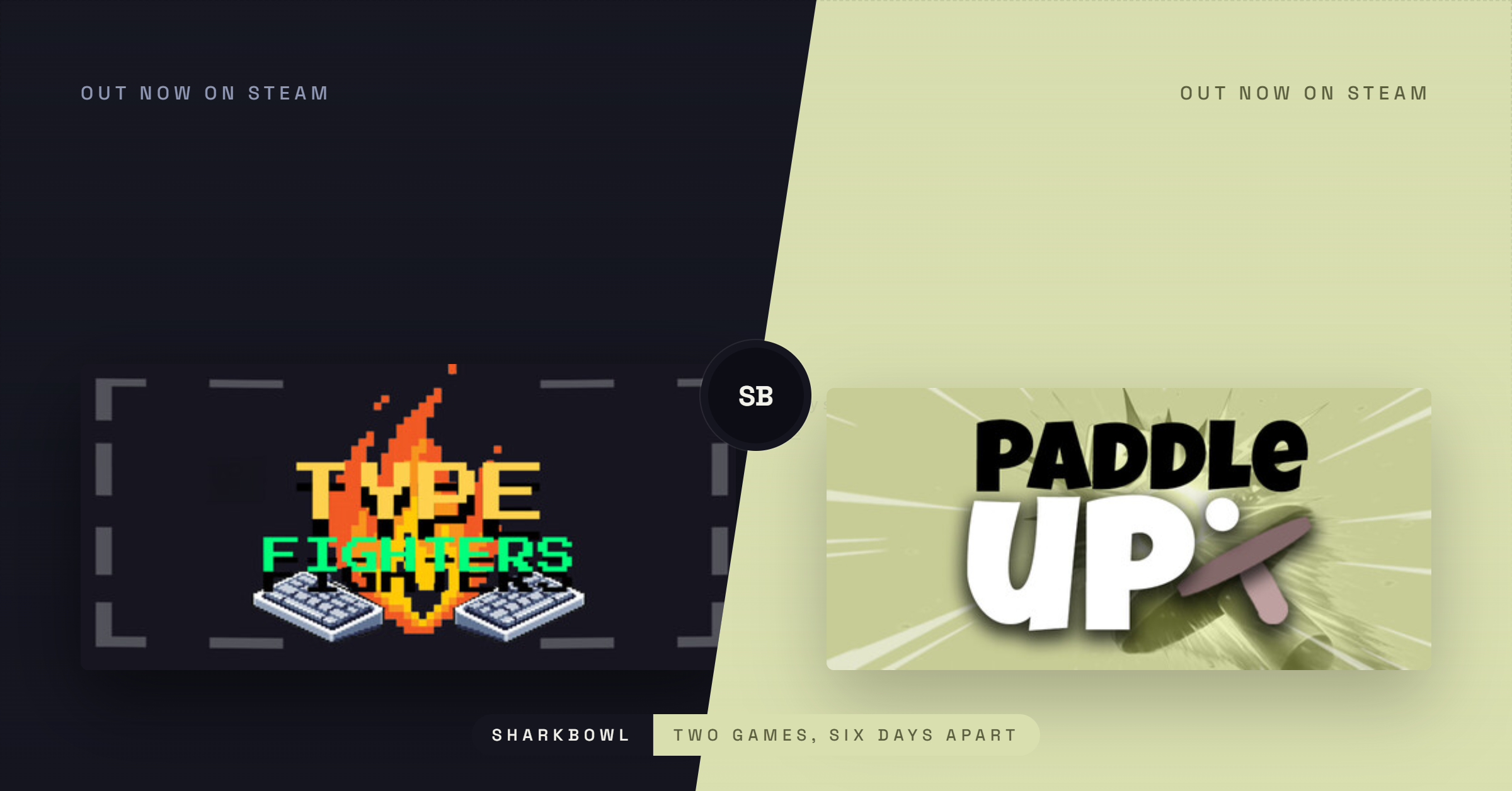
If you have played anything we have shipped, you know our comfort zone. Punch Champs is a tactical fighter about reading your opponent and landing the hit. Star Shredders throws waves of enemies at you until your thumbs ache. Type Fighters turns your keyboard into a weapon. PaddleUP! is exactly as chaotic as it sounds. We like games that grab you by the collar.
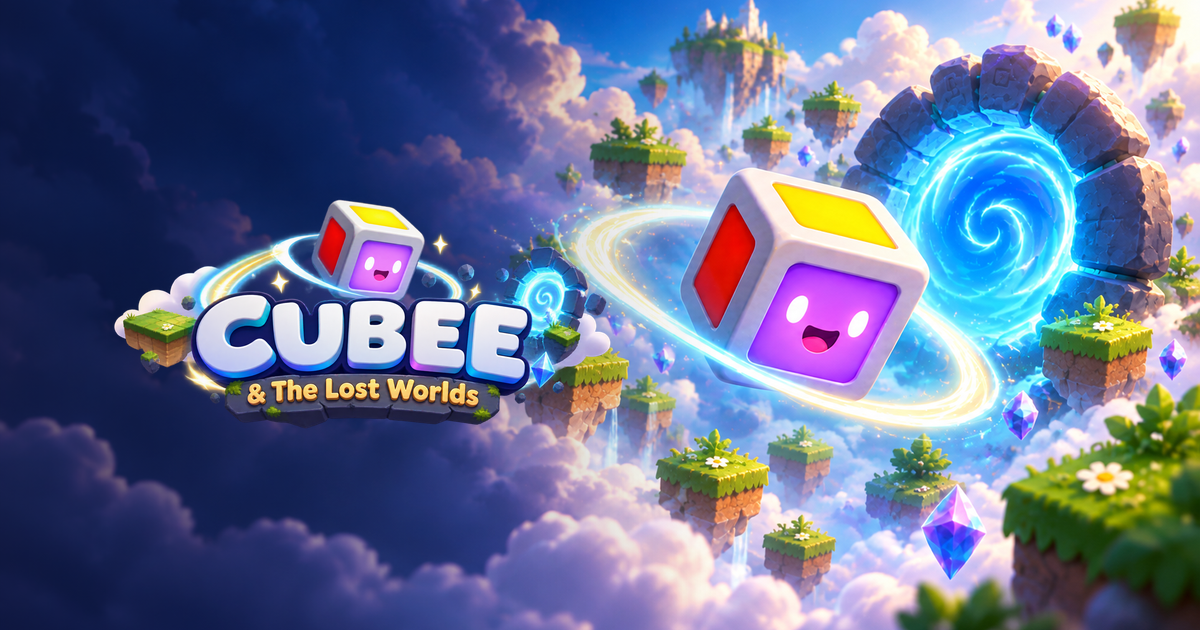
So it surprised a few people, us included, when our current project turned out to be a quiet one. Cubee & The Lost Worlds is a cosy puzzle adventure. No combos, no bullet storms, no timer counting down to disaster. Just a small cube, some worlds that have gone a bit lost, and you, taking your time. Here is what building it has taught us so far.
Loud is our comfort zone
When you make action games, you lean on a reliable trick: momentum. If a player is not sure what to feel, you throw more at them. More enemies, more speed, more noise, more numbers going up. Tension does a lot of the heavy lifting, and it hides a multitude of design sins. A dull moment in a shooter is easy to paper over. You just spawn another wave.
We did not fully appreciate how much we relied on that until we took it away.
Cosy is not easy mode for developers
There is a myth that cosy games are the gentle option to build. Fewer systems, lower stakes, surely less work. We can now report, with feeling, that this is not true.
When you strip out the noise, every remaining moment has to stand on its own. A puzzle cannot lean on adrenaline to feel satisfying, so the satisfaction has to come from the idea itself, from that small click in your head when the solution arrives. A room cannot rely on threat to feel interesting, so it has to be pleasant to simply be in. The margin for hiding a weak moment basically disappears. In an action game a boring five seconds vanishes in the chaos. In a cosy game, five boring seconds is the whole vibe collapsing.
The hardest part was slowing down
Our instinct, honed over years of loud games, is to keep the player busy. Early builds of Cubee were far too eager. We kept adding prompts, hints, and little rewards, terrified that a player might sit still for a moment and get bored. Then we watched people play, and the pattern was clear. The bits they loved were the bits where we had finally left them alone.
So we started removing things. We slowed the pacing down. We let puzzles breathe. We gave the worlds room to just exist for a few seconds before asking anything of the player. It felt deeply wrong to us, and it was exactly right for the game. Learning to trust a quiet moment turned out to be the single biggest shift in how we work.
Finn, our resident bubble, has been no help whatsoever with the puzzles, but he does approve of the slower pace.
What punchy games taught us about quiet ones
Here is the twist we did not expect. All those years making loud games turned out to be the best possible training for a quiet one.
Making fighters and shooters teaches you to obsess over feel. How a button press lands, how a moment of feedback reads, how a single frame of animation changes everything. Cosy games need that obsession just as badly, they simply point it at gentler targets. The way a cube nudges a block. The soft sound when a world clicks back into place. The little pause before a reward. That is the same craft we have always practised, aimed somewhere calmer.
Turns out our action games were never really about the action. They were about making moments feel good. Cubee is the same job, just whispered instead of shouted.
Come and poke around
Cubee & The Lost Worlds is still in development, and there is a free demo you can play right now. If you have only ever known us for games that shout, we would love you to try the one that whispers, and to tell us where it is working and where it is not. That kind of honesty is how our small games get better, and it is the whole reason we build in the open.
No sharks were harmed making a cosy game, though several of our loud-game instincts were gently retired.
Go break something. Or in this case, go fix something, quietly.